
Gold prices are likely to trade firm next week as traders await key economic data, including US inflation numbers, for fresh cues on interest rate outlook, while silver may remain volatile amid shifting risk sentiment and speculative activity, analysts said.

Gold and silver prices are poised to maintain their record-setting rally in the coming week as investors focus on global inflation data and key macroeconomic indicators that shape central bank policy paths, analysts said.

From the Sensex firms, Adani Ports declined 2.42 per cent. Bajaj Finserv, Bajaj Finance, Power Grid, Eternal, IndusInd Bank, Maruti, Tata Consultancy Services and UltraTech Cement were among the biggest laggards. Mahindra & Mahindra emerged as the only gainer in the pack.

On the other hand, Bharat Electronics, Kotak Mahindra Bank and Axis Bank were the laggards. In Asian markets, South Korea's Kospi, Japan's Nikkei 225 index, Shanghai's SSE Composite index and Hong Kong's Hang Seng settled higher.

Breakthroughs in Artificial Intelligence and allied deep technologies are boosting productivity, efficiency and human potential to unimaginable levels, Reliance Industries chairman Mukesh Ambani said on Friday describing the "miraculous power" of AI as new 'kamdhenu', the divine wish-fulfilling cow.

Focus firmly on match, India-Pakistan clash will be interesting: Kotak

India's handling of the Iran crisis reflects a growing strain between strategic autonomy and geopolitical alignment, observes Ambassador M K Bhadrakumar.

After three post-pandemic years of an upcycle, it was a mixed bag for the realty sector in 2025, with sales volumes in the residential real estate moderating across top cities, and commercial real estate and institutional investments emerging as standout performers. Residential: Volumes soften, value holds firm.

By all available indications, the White House drafted a face-saving note and handed it, ready-made, to Islamabad. Pakistani Prime Minister Shehbaz Sharif was supposed to then post it in the guise of a plea urging Trump to extend the deadline by two weeks 'to allow diplomacy to run its course'. Trump would then graciously accept Pakistan's 'request' and declare a ceasefire. Sharif dutifully posted the message on X. Except that he, or whoever was handling the account, forgot to delete the tell-tale first line visible in the edit history: 'Draft - Pakistan's PM Message on X'. Prem Panicker's must read blog on the Iran War.

Israel and the United States had a plan. Iran punched back. And now the Gulf is reeling, the world is beginning to feel the pain and, as on date, no one in Washington or Tel Aviv appears willing to admit that the punch has landed, notes Prem Panicker, continuing his must-read blog on the war in the Middle East.

Venture funding in India slowed in the third quarter (Q3) of 2025 amid geopolitical uncertainty, though exit activity surged to a seven-year high, according to Venture Pulse from KPMG Private Enterprise, a quarterly report tracking investment trends globally across major regions around the world.

Stock investors will track the ongoing conflict between Iran and Israel, Brent crude oil prices, inflation data and the US Fed interest rate decision for further cues this week, analysts said. Tariff-related news would also dictate trends in the equity market, experts noted.

'Was the five-day pause ever meant to hold, or was it simply another instrument of signaling, of positioning, of buying time in a war where even the pauses are tactical?' asks Prem Panicker in his must read daily blog on the Gulf War.

President Droupadi Murmu addressed the nation on the eve of Republic Day, emphasising India's role in promoting peace, the empowerment of women, and the country's economic growth.

India's $280-billion IT industry heads into 2026, balancing visa-related headwinds and global trade uncertainty against its biggest-ever push into artificial intelligence and the rapid expansion of global capability centres (GCCs). Heightened scrutiny of the US H-1B visa programme - including a proposed $100,000 fee for new visas and concerns over a potential 25 per cent outsourcing tax - has complicated cross-border delivery for Indian firms, even as companies accelerate efforts to reduce reliance on onsite staffing.

Foreign portfolio investors withdrew over Rs 22,530 crore ($2.5 billion) from Indian equities so far this month amid rising US bond yields and a stronger dollar, continuing their selling streak from last year. This came following an outflow of Rs 1.66 lakh crore ($18.9 billion) recorded in 2025, triggered by volatile currency movements, global trade tensions and concerns over potential US tariffs and stretched market valuations.

'We need to give Pakistan something serious to think about on its eastern front -- that is the only way to actually help Afghanistan right now.'

From the Sensex firms, Reliance Industries, Tech Mahindra, Eternal, HCL Tech, Infosys, IndusInd Bank, Tata Consultancy Services and Bajaj Finserv were the biggest gainers. In contrast, UltraTech Cement, Sun Pharma, Power Grid, NTPC, Kotak Mahindra Bank and Mahindra & Mahindra were among the laggards.

Both teams began their World Cup campaigns in contrasting fashion. Hosts India defeated Sri Lanka by 59 runs, while Pakistan, collapsed against Bangladesh, losing by seven wickets in a match where they struggled against both pace and spin.
Tata Steel on Wednesday reported a 272 per cent year-on-year (Y-o-Y) jump in consolidated net profit, attributable to owners, at Rs 3,101.75 crore in the second quarter of 2025-26 (Q2FY26) led by higher sales volumes in India and planned cost takeouts across geographies.

Taking Kharg would give the US control over virtually all of Iran's oil exports and thus provide significant leverage, notes Prem Panicker in his must read daily blog on the Gulf War. It would also put American troops within range of Iran's remaining missiles, drones, and artillery on a piece of real estate that is just eight square miles in size, and just 15 miles from the Iranian mainland.

Net inflows into equity mutual funds (MFs) moderated for the second straight month in September, declining 9 per cent during the month to Rs 30,422 crore. The slowdown came as redemptions from active equity schemes rose 30 per cent month-on-month (M-o-M) to a one-year high of around Rs 36,000 crore.

The question is no longer whether the war will expand. It has. The next few days will tell us whether the war stabilises around Hormuz or whether the Strait itself becomes the trigger for a far larger rupture. What to watch for over the next 48 hours is simple: Any move by the US toward direct naval control of the Strait; any credible Iranian attempt to disrupt or mine shipping lanes and, critically, whether energy infrastructure in the Gulf continues to be targeted.If those lines are crossed in tandem, the war will no longer be containable within the region.
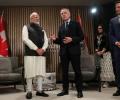
The statement suggests that Canadian authorities do not see ongoing foreign interference or violent activity tied to India at present.

Investors' wealth eroded by Rs 5.98 lakh crore on Thursday, tracking weak trends in equities where the BSE Sensex tumbled 1 per cent. Benchmark indices Sensex and Nifty declined 1 per cent in tandem with weak global market trends amid growing tensions in the Middle East.

Bangladesh's exclusion from the T20 World Cup highlights how regional politics are increasingly influencing cricket in the Indian sub-continent.

Sensitive issues remain. Water sharing of the Ganga and Teesta rivers. Treatment of minorities, particularly Hindus. Border management. Trade imbalances. Connectivity projects.What happens next will shape not just bilateral ties, but the balance of South Asia itself, points out Ramesh Menon.

Gold prices on Tuesday surged Rs 723 to touch an all-time high of Rs 110,312 per 10 grams in the domestic futures market, tracking strong global cues amid growing expectations of a US Federal Reserve interest rate cut next week. Traders said weak US labour market data has strengthened the case for monetary policy easing, putting pressure on the dollar and boosting demand for the safe-haven asset.

Fight on toward goals that keep receding, or exit with most objectives unmet. Trump is agitated, his poll numbers falling below the Plimsoll line, his base fractured between those who back the war and those who remember that he campaigned on ending them.
Foreign investors fled Indian equities in 2025 at a scale never seen before, pulling out a record Rs 1.6 lakh crore (USD 18 billion) as volatile currency movements, global trade tensions, especially potential US tariffs, and stretched valuations eroded risk appetite, though flows are expected to turn sustainably positive in 2026.

Capital investment by the private sector is likely to rise 21.5 per cent to Rs 2.67 lakh crore in 2025-26 aided by robust macroeconomic fundamentals, and a 100-bps policy rate cut, according to an RBI article. Despite global uncertainties, Indian firms entered the 2025-26 fiscal year with healthier balance sheets, higher cash buffer, improved profitability, and greater access to diversified funding sources, said the article 'Private Corporate Investment: Growth in 2024-25 and Outlook for 2025-26' published in the Reserve Bank of India's (RBI's) August bulletin.
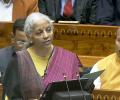
Budget 2026 sticks to fiscal discipline, shuns populist measures despite five key state elections coming up, but ends up rattling stock markets with a higher transaction tax on derivatives trading.

Pakistan's decision to boycott its Twenty20 World Cup match against India has drawn widespread support from fans and administrators who hailed the move as a long-overdue stand in a rivalry in which sport and geopolitics have collided.

Fada estimates that global supply chain headwinds like scarce availability of rare earth elements for electric vehicle components and geopolitical tensions may affect urban consumer sentiment in June as well.

Even as New Delhi turns up the heat on Turkish firms over Ankara's public embrace of Islamabad, Indian companies rooted in Trkiye are staying put. Mahindra & Mahindra (M&M), Dabur India, and Jubilant FoodWorks say it's business as usual, with no plans to alter course despite the geopolitical chill.

Alliances fight wars effectively only when they share an endgame. If Israel acted without US knowledge, then the military alliance is operating without real coordination at the level of strategic targeting. Neither picture is reassuring in a war that is no longer regional in its consequences. Prem Panicker continues his must read daily blog on the Gulf War.

Gold prices are likely to remain under pressure in the coming week as investors await key US macroeconomic data for cues on the Federal Reserve's potential direction on interest rates, which in turn will influence the trajectory for the precious metal, according to analysts. Market sentiment has tilted away from safe-haven assets like gold amid fading geopolitical tensions and improving risk appetite towards riskier assets such as equities, they said.

IndiGo is adjusting its long-haul flight schedule, including suspending services to Copenhagen, due to airspace uncertainties and airport congestion. The airline will also reduce flights to London and Manchester.

'Strikes into the Gulf countries are proof that the security guarantees offered by the US are ineffective and that the Gulf countries cannot rely on American security assurances for their safety.'

United States Senator Lindsey Graham on Sunday claimed that Indian Ambassador to the US Vinay Mohan Kwatra spoke to him last month about India buying less Russian oil and asked him to tell President Donald Trump to relieve the 25 per cent tariff.
